The first thing I did was to use a machine that forgets the future. Or rather, one that remembers so completely that it could only reproduce the past. I fed a Markov Chain (a deterministic algorithm where the future is always predetermined by the present, and thereby the past) a corpus of poems and stories by David Wong Hsien Ming, Boey Kim Cheng, Vajra Chandrasekara, Ru Freeman, and Wong Phui Nam. I ran the material through multiple settings, watching the output shift. What came back was hallucinatory, omen-like, vision upon vision.
I recognised that feeling. It was the vertigo of reading Etel Adnan’s The Arab Apocalypse: imagery shifting too fast to hold, metaphor bleeding into metaphor until you are no longer sure what you are seeing. Yet the poem wasn’t enough. The poem wanted to be something more. So I made a poetry film.
The premise is this: 35,403,590 intertimeline refugees are trying to reach us. They have no language of their own that we could understand, so they have composed their message entirely from those poems and stories and films available in our world: Annihilation, Koyaanisqatsi, The Day After Tomorrow, Beasts of the Southern Wild, Upstream Color, Children of Men, Baraka, Samsara, Waterworld. They have scrambled our fictions to tell their stories. They are asking: Can you build a bridge?

The work began as a commission for The Packet’s exhibition, Water Under The Bridge / Bridge Under Water, staged as part of the Singapore Biennale 2025. The Biennale was structured around the theme of “pure intention”: a reflection on the nation-state’s relentless planning and its 60 years of rapid development. The Packet was invited to challenge that very premise. We staged the work inside an internet café, a space of fractured time where histories that should have been resolved keep returning to interrupt the future. Now, the work travels to Rubaiya Qatar’s Unruly Waters, an exhibition that uses ocean currents and global trade routes to think about movement, ecology, and exchange. The poetry film has become a bit of a refugee itself, moving between institutional enclaves, speaking through their screens, and asking its question from the inside.
I want to use this space to think through what that work is doing by tracing three terms that have become central to how I understand it: hyper-awareness, hyper-memory, and vigilant wakefulness. I wouldn’t say these are themes of the work, per se. Rather, they are the formal operations that became apparent only upon doing the work and reflecting on it after.
A note on method and agency: this essay lives in three unresolved tensions rather than resolving them — who hijacks the Markov Chain (the refugees or me), how a contextless machine is made to yield context.. The refugees are a fiction I author; the machine’s output is material I select. I attribute agency to the refugees because that attribution is the work’s argument, not because it is literally true. The hijack is a fiction I perform: I select the corpus, the machine rearranges it, and the frame attributes the result to the refugees. The work’s argument is that this attribution changes what the output means — not that the machine has agency. Read these as openings, not verdicts.
Hyper-awareness: The Predictive Gaze and the Enclave
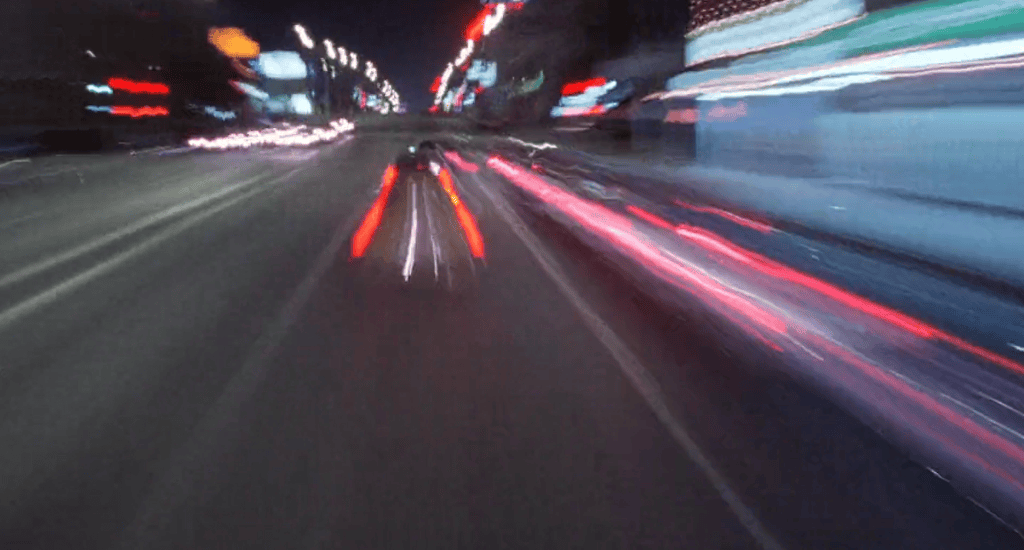
The refugees are hyper-aware because they have to be. They watch the sea come up in the streets, grinding its briny teeth down on broken asphalt. They know the first signs because they have learned, the hard way, that the first signs are the only ones that matter.
Trauma theory usually frames hyper-awareness as a pathology: the body locked in a state of readiness it cannot switch off. The refugees’ hyper-awareness is not a disorder. It is a survival epistemology. They notice the things the enclaved have trained themselves not to see: the gaps plugged with gleaming gold, the perfect rows of shining teeth, the anaesthesia, amnesia, hypnosis.
The work asks something harder of us: those of us reading from the dry land of our living rooms. It asks us to become hyper-aware of our own comfort. Antoinette Rouvroy describes a regime that anticipates and pre-empts behaviour without passing through reflexive awareness. I am stretching the term “hyper-awareness” to name the enclave’s total monitoring—and contrasting it with the refugees’ survival epistemology, which is awareness of the unarchived. The climate crisis intensifies this. The climate migrant — just coming into existence, summoned by future catastrophes — is already being mapped by predictive algorithms. These tools are spells that call into being what they want to prevent. The prediction itself alters reality, tightening the grip of security technologies along existing axes of power.
When the poem says They plan. They build., it is not a prophecy. It is a news report from the present. The enclave, the gated community, the smart city: these are the architectures of a hyper-aware class that has mapped the rising waters and decided to build its way out of them. The perfect rows of shining teeth are the smile of the algorithm that has already decided who gets to be dry.
But this is not awareness. It is monitoring. The poetry film wants to hold these two states apart: the algorithmic hyper-awareness of the enclave, and the hyper-awareness of the refugees. The latter is the awareness of the unarchived. It is the knowledge that comes from living in the gaps of the system’s predictive models. When I feed our fictions into the Markov Chain and scramble its outputs, I am trying to produce a hallucination that resists the smooth surface of the smart city. I am trying to produce the first signs.
Hyper-memory: The Black Box and the Counter-Archive
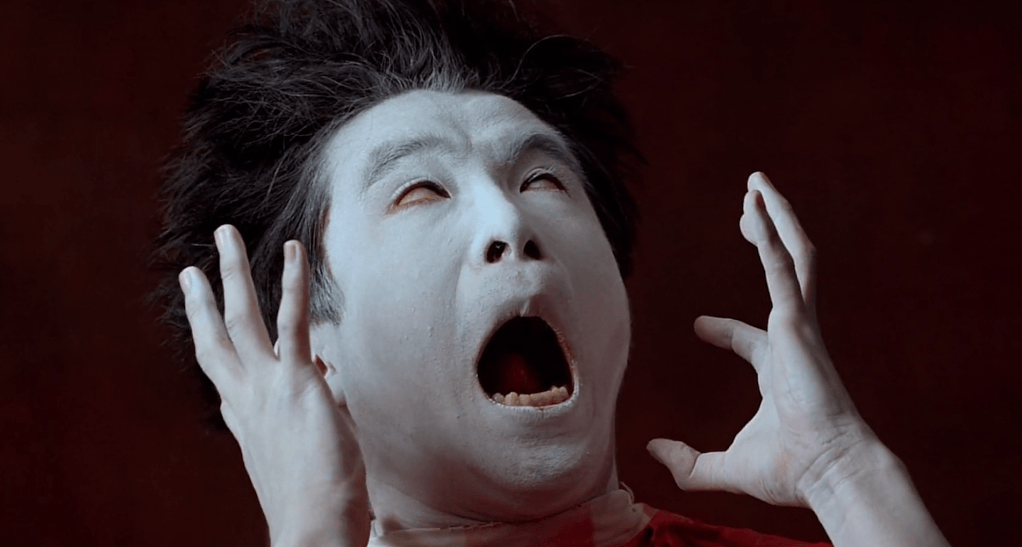
Can we posit the Markov Chain as a hyper-memory machine? Why, you ask. Because it cannot forget. Strictly speaking, a Markov Chain is a white box: a transparent matrix of transition probabilities where you can trace exactly why one word followed another. But in the making of the work, I treated it as a Flusserian black box: an apparatus whose programmed interior dictates the possibilities of the output. I fed it our literature. It spat out visions. I am using “black box” in Flusser’s phenomenological sense, not the computer-science sense. Computationally, the chain is transparent; experientially, in the gap between input and output, it feels opaque, automatic, and alien.
How exactly does one teach a machine to forget the future? I didn’t. A Markov Chain is already incapable of seeing it. It has no context window, no intentionality, no vision of the end of a text. Let’s be clear: this is not an essay about large language models. The Markov Chain is deliberately the least agentic machine available. I began using it 10 years ago, when we still used the term NLP and LLM wasn’t in common parlance. I chose it because its poverty is the point. This essay’s target is the longer lineage of algorithmic governmentality and programmed forgetting, not the latest model release. By its very deterministic nature, a Markov Chain is forced to produce a future that is nothing but a statistical echo of the past. It cannot imagine a new world; it can only rearrange the ruins of the old one. The machine does not prophesy; it produces a symptom.
Here is where the term hyper-memory becomes a problem, and therefore a useful one. Priscila Almeida Cunha Arantes writes of a “hypermemory regime” where data capitalism has appropriated the function of cultural memory. In this regime, memory is no longer a lived practice; it is a cognitive commodity, classified, monitored, and monetised. The Markov Chain is the perfect subject of this regime. It is an engine of total recall that understands nothing. It remembers the syntax, but it forgets the breath; it stores the words, but it forgets the human cost.
The poem’s enclaved class — the they who drill through the fossils of last century — are the architects of this regime. They plug the gaps with gleaming gold. They erase the flaws. Flusser called this the shift from ars memoria to an art of programmed forgetting. The new history that the enclaved build is a curated, datafied memory, stripped of its mess and its trauma.
The capitalists and nation-states believe they have mastered the future by mapping the rising waters, calculating the risk, and building the sea walls. But their mastery is also a forgetting. They believe they are erasing the flaws and building a new history, but their programmed future is just a repeating loop of the present. When I fed our fictions into the machine, I was not asking it to predict tomorrow. I was forcing it to reveal the claustrophobia of a future entirely determined by our past.
So the refugees cannot simply oppose this regime with more hyper-memory. They cannot fight the black box by becoming a bigger black box. Instead, they operate a counter-archive. If hyper-memory is the regime’s total recall, counter-memory is the body’s partial, situated retention.
They remember their own bedroom floors, their own versions of faded red polish. This is the memory of the trace, the memory of the unarchived. Flusser’s Vampyroteuthis Infernalis — the abyssal mollusc — is useful here. Its memory is not stored in external systems, but embodied in a body. It is a lived, performative memory, an organic archive in permanent updating. While the hyper-memory regime retains everything, it understands nothing. The refugees’ memory is the counter-memory of the body which retains its world.
The Markov Chain, fed on our own literature, becomes a machine for generating this counter-archive: a memory of the future, scrambled from the past. To use it is to practice what Arantes, reading Flusser, calls a gesture of deprogramming the black box. The refugees do not reject the algorithm; they hijack it. By feeding it a corpus selected on their behalf, the work forces the machine to produce an analogous context.
What does this deprogrammed context sound like? It sounds like a memory breaking down and reforming. This is the raw output of the Markov Chain:
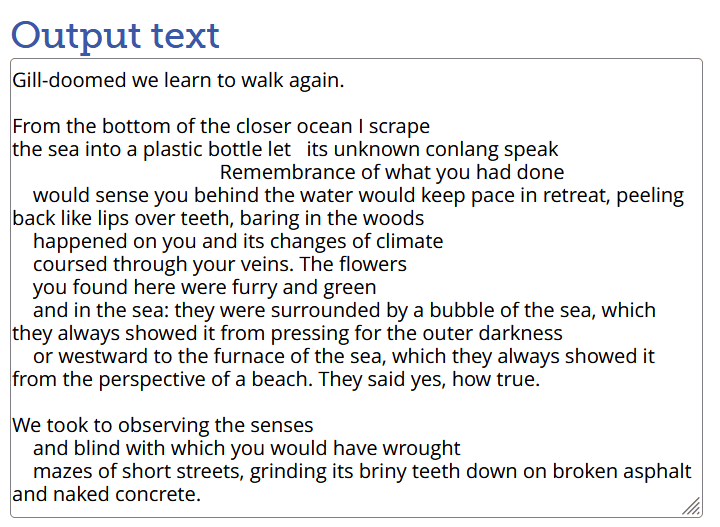
In this broken syntax, the ruins of our literature begin to speak a different language — one that remembers the sea, the teeth, and the gills, even as it forgets the rules of grammar.
Vigilant Wakefulness: The Gills and the Unfinished Sonnet
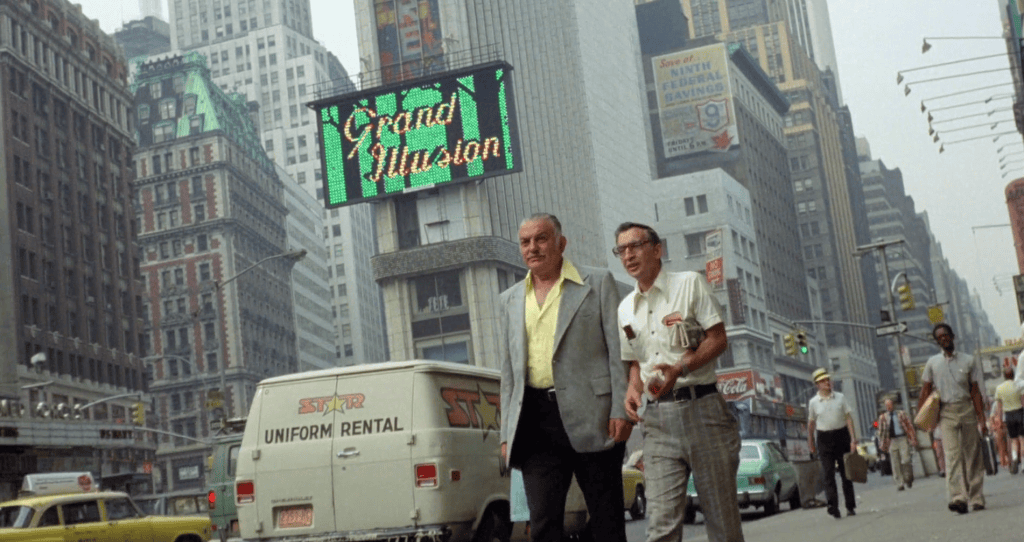
We are constantly told to be vigilant, but the vigilance demanded of us is usually paranoia. Watch for threats. Monitor your borders. Be suspicious of the other.
There is another tradition of vigilance. In the Christian ascetic tradition, nepsis is the guarding of the heart, a wakeful attention. In the Sufi tradition, a parallel discipline is murāqaba: the vigilant watching of the heart against ghafla, or heedlessness, forgetfulness, primordial confusion; a continuous wakeful attention that, against the rising tide, becomes a refusal of the enclave’s sleep. In Foucault’s late work, vigilance and insomnia are the postures of the philosopher who refuses the daydreams of evidence. The refugees embody this second form of vigilance. They are not paranoid; they are awake. They do not watch their neighbours; they watch the water. They do not guard their borders; they guard their memories.
Perhaps the most devastating line to emerge from this process is: We finally gave ourselves those gills. / Yet we never felt comfortable / in their living rooms. The gills are adaptation, survival, and not comfort. To be vigilantly wakeful is to accept that you will never be at home in the enclave. It is to accept that you will always be in the water.
Is this why the work insists on the unfinished sonnet? The sonnet is a closed form, a container. Is the enclave then the sonnet? The refugees live between enjambments: in the space that does not close, the line that does not end. To live between enjambments is to live in the state of vigilant wakefulness. It is the bridge that is always partial, always provisional, always at risk of being washed away. The poetry film, too, then, is an unfinished sonnet. It does not resolve. It repeats, returns, keeps pace. The repetition — Anaesthesia, amnesia, hypnosis — is a reminder of the discipline necessary to resist erasure. It is the refusal to let the signs go unnoticed.
The Present Tense of the Flood
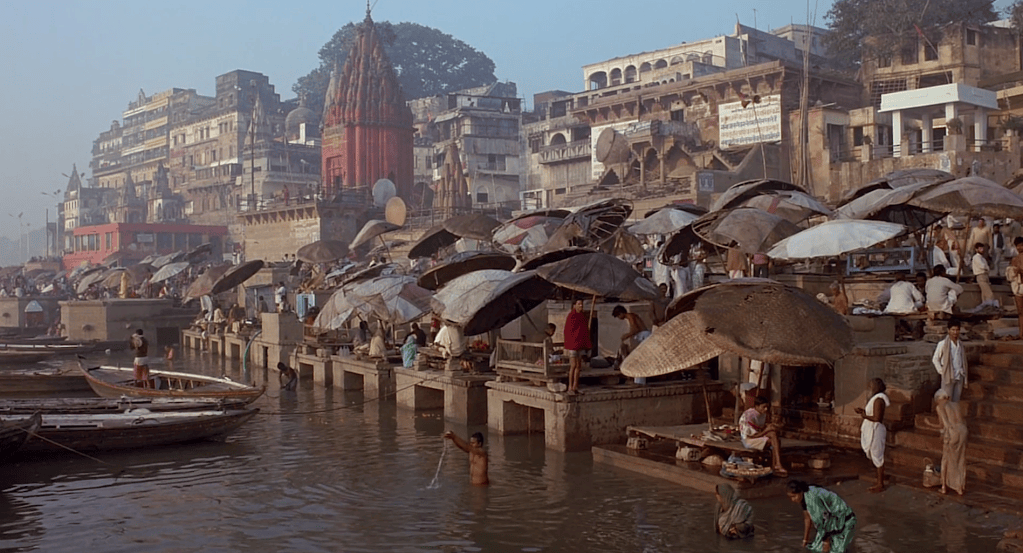
The intertimeline refugees were never a thought experiment so much as a projection. The 35,403,590 was a number I invented to make the abstraction visible, yet the abstraction has a real address, and it is the island I write from.
When I was 13 years old, I was transfixed by the moving image of the sea thrashing into the coast of this island I struggle to call home. Our father immediately packed his bag and set off to our ancestral hometown of Sammanthurai, on the other side of the island. He worked tirelessly with our community to see to those it affected. Thousands of bodies were buried in the mass grave that my maternal grandfather had allocated in our hometown. He too would be buried there upon his death. Last year, I dreamt of tsunamis so often that I lost count. Then a cyclone hit the island.
Sri Lanka, or Ilankai as I prefer to call it, is among the most climate-vulnerable countries in South Asia. Approximately 87 per cent of its population lives in areas of moderate to severe climate hazard. By 2050, an estimated 19 million of us will be living in locations set to become climate hotspots. That’s nearly the entire population. A World Bank projection estimates that climate change could reduce incomes here by 10 per cent by 2050.
Between 2008 and 2022, the Internal Displacement Monitoring Centre counted over 3.4 million internal displacements in Sri Lanka, triggered by 339 disaster events. In 2025 alone, there were 563,595 internal displacements. When Cyclone Ditwah tore across the island in late November 2025, more than 600 people died, over 200,000 were pushed into temporary shelters, and roughly 2.3 million were affected.
As the Centre for Poverty Analysis puts it, Sri Lanka “counts people fleeing floods” but “does not yet count the many more who move because of climate stress — before, after, and instead of disasters.” This is the country’s climate-human mobility blind spot. A 2021 survey of Sri Lankan migrant workers in Kuwait found that 63 per cent said climate-related impacts had contributed to their decision to work abroad. They appear in no flood evacuation count, and yet their movement is shaped by drought as much as by wages. This is the sea that comes uneven. This is the sea that rises before the storm and after the rescue boats have gone home.
The poem’s opening image — the sea coming up in the streets — is not metaphor. Around 25 per cent of the population lives in areas vulnerable to sea-level rise, within one kilometre of the coast. In Colombo, 19 per cent of the coastline is highly exposed, placing disproportionate risk on informal settlements. The enclaved class of the poem have their counterparts here. The development projects, the gated communities, the tourism infrastructure that displaces fishing households: these are the local instantiations of the global logic the poem describes. The perfect rows of shining teeth are the facades of a coastal economy that knows the water is rising and builds anyway.
Globally, the World Bank’s Groundswell report projects that over 216 million people could move within their own countries by 2050 across six regions. South Asia alone could see 40 million internal climate migrants. The number I used in the poetry film is 35,403,590.
The invented number and the counted numbers are not the same kind of claim. One is a projection of a possible future; the others are a record of a present that is already here. The essay needs both because policy speaks in the second and art must speak in the first — but they should not be mistaken for each other.
Can we build the bridge?
I keep returning to this: what is the work actually for? It is for the practice of these three states. To become hyper-aware of the systems that predict and control us. To practise a counter-memory of the histories those systems would have us forget. To practice a vigilant wakefulness that refuses the anaesthesia, amnesia, and hypnosis of our own comfort.
The statistics are a necessary language, the compound tongue of the policy world. Yet they are not sufficient. A number cannot convey the faded red polish of a bedroom floor, or the fear of a fishing household watching the shoreline advance. The poem’s work is to hold both registers at once: the hard fact of the millions of displacements, and the soft fact of the bedroom floor.
The question at the end of the frame is not rhetorical. Can you build a bridge in time? Across time? The bridge is not a sea wall. It is not a resettlement scheme. It is the infrastructure of counting what has been uncounted. It is the legal recognition of the climate-displaced, who currently have no status under international refugee law. It is the adaptation funding that reaches the fishing household before the erosion takes the land. It is the decision to treat the sea as a force that must be met with justice, not only with engineering.
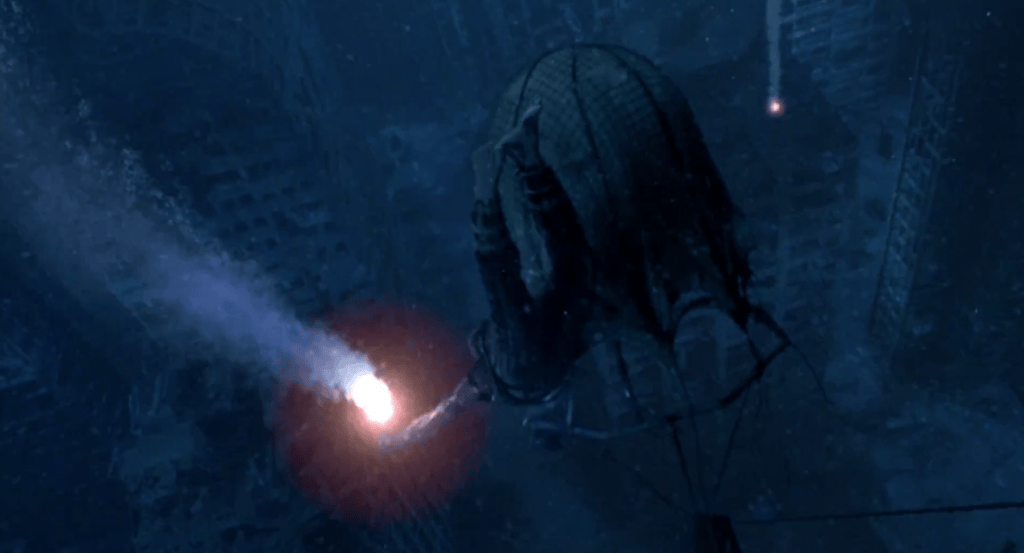
The World Bank says the window to act is still open, though it is closing. The poem’s refrain — They have it all so it will not [hurt/stop] — is the sound of the window coming down. The bridge is what we build while it is still open. The first signs keep pace in returning. The question is whether we will keep pace with them. None of this is a solution. The bridge may not be built.
The Prophet ﷺ said: “If the Hour is established and one of you has a sapling in one’s hand, let one plant it.” The hadith does not promise the tree will grow. It does not promise shade, or fruit, or that anyone will remember who planted it. It asks for the gesture anyway. Vigilant wakefulness is not the assurance of survival. Murāqaba is not a guarantee of safety. It is the discipline of planting the sapling while the water rises, of keeping the heart turned toward the One who turns the hearts, even when the ground is already wet.
In the future of my dua:
the first signs are noticed before the water is at the ankles;
the bedroom floors are remembered without having to drown;
we have no need for gills;
the statistics are read aloud in all the languages of the world;
there is no enclave and no need to be enclaved;
the algorithm is deprogrammed by a body that breathes;
the bridge is built from earth to heaven;
climate change is met with justice;
the heart is not left to its own turning;
and we keep pace with the signs that keep pace in returning.


Leave a Reply